The right turning techniques are crucial for carving up the mountain. While many snowboarders try to rotate their board into a turn, it's best to use the laws of physics to carve your snowboard into a shape that works for you. Learn how to turn your snowboard properly and you'll be carving up mountains with ease.
The most basic turn involves a simple traverse of the edge. This requires that you place your weight on the front foot, angle your knees away from the tail of the snowboard, and turn your head to the uphill side of the hill. A little pressure should be applied to the backfoot as well. As you move through the turn, you'll be able add a bit more pressure. The more pressure you apply to the back foot, the more the board will bend, resulting in a better turn.
It is best to create an arch to make a turn. This will make it easy to turn the board. However, you might not be able to do this if the slope you're riding is variable. Be aware that the speed of your turn can vary from one snowboard rider to another. If the slope is too steep, you may need to slow down and decrease your acceleration. You can also influence the direction of pressure by altering the pressure that you apply.
While you are turning your snowboard, it is important to keep your head up. Keeping your head in the right position can be a challenge, especially if you're new to snowboarding. By focusing on the position of your head, you will be able make the turn you want.
A good turn requires a correct stance. Your feet should be in direct contact with your snowboard. But don't lean back too much. You don't want to lean too far back and end up falling off your board. If you lean back too much, you'll have to lean back even further, and this will cause a lot of rotational motion.
The Garland exercise is a good exercise to perform if you're unsure about how to turn a snowboard. It involves traversing across a hill without building up much speed. When you arrive at the bottom, you'll have to reverse your direction and return to the uphill side. This will help you turn your snowboard with minimal speed.
A good exercise to do is the 'J' turn. This is a fancy name to a turn that involves dropping into the slope from a flat bottom and then moving across it. While it does require some knowledge about the physics of the board, it can be a great way of practicing turning without increasing your speed.
You'll need to practice turning your board the right way before you're ready to tackle the steeper slopes. It's best to take your time while practicing, but keep your head up.
FAQ
Do extreme sports need expensive equipment
Yes. Equipment for extreme sports can cost thousands of Dollars. These activities are affordable for those who don't have the means to pay a lot.
What are some of the benefits of extreme sporting?
Participating in extreme sports offers many health benefits. These are just a few.
-
Exercise can help you stay healthy. When you exercise, calories are burned. And this burns fat. So you look better.
-
Extreme sports are great for self-confidence. Many people feel great about themselves after participating in extreme sports.
-
Extreme sports are great fun. You feel free and have lots of energy.
-
Extreme sports offer adventure. What could be better than doing something adventurous? You never know what adventures you might have.
-
Extreme sports can be dangerous. You will always be safe, no matter what sport or activity you choose.
-
Extreme sports may be dangerous. Most extreme sports are safe if done correctly.
-
Extreme sports offer relaxation. Relaxing is best when you do something you love.
-
Extreme sports build character. Extreme sports can help you build courage, discipline and perseverance. These qualities are essential to everyday life.
-
Extreme sports make you stronger. Physical activity is a major component of most extreme sports. This will give you endurance and strength.
-
Extreme sports are good for your health. Fitness is essential for all. It enhances your quality life.
-
Extreme Sports can be a great form of recreation. Extreme sports can be a wonderful way to spend time with loved ones, friends, and even yourself.
What is the most dangerous sport in extreme sports?
It's snowboarding, because you balance on top a board while falling from a mountain at high speeds. Falls you do it wrong, you can die.
Is it an extreme sport to play football?
It all depends on who you ask. Millions of people around the world have played football for thousands of year. Many would argue that it is not a sport but a form of entertainment. Some argue that it's as much a game as any other. And some people believe that football can be considered the ultimate sports.
Truth lies somewhere between these extremes.
Football is an extreme game. However, it requires teamwork, strategy and skill.
Is extreme sport dangerous?
Extreme sports are dangerous because they put people at risk for injury and death. There have been many other deaths, including drownings and electrocutions.
Even though you are riding a bike, rollerblading or doing other safe activities, accidents can occur.
Extreme sports can be dangerous for those who sustain injuries.
The National Football League forbids players from participating in extreme sports like skateboarding because of the high risk involved.
Do not attempt extreme sports without first ensuring that you and your friends are safe.
How is an extreme sport different from other sports?
An extreme sport involves physical exertion and/or skill combined with a challenge.
It might also require the use of unique clothing or helmets.
Extreme sports are different from traditional sports which require special training prior to participating.
They are typically outdoors and don't offer any safety net in the case of an accident.
Some extreme sports are illegal, while others are legal. It depends on where you live and what kind of activity you're involved in.
You need to verify the local laws if you plan on doing extreme sports.
Are there any extreme sports you can think of?
Here are some examples of extreme sporting events:
-
BASE jumping -- It is one of most dangerous extreme sports. BASE stands for building antennae, span and earth. It involves leaping off a cliff to glide down using a parachutist. Before they can attempt this stunt, BASE jumpers must pass stringent tests.
-
Climbing -- Climbing is another type of extreme sport. It involves climbing rock faces, trees, cliffs, and other structures. Protective gear is often worn by climbers to prevent falls.
-
Freestyle skiing -- Freestyle ski is often considered the ultimate extreme sport. Freestyle skiing mixes snowboarding and ice-skating. You need speed, agility, and balance to do freestyle skiing.
-
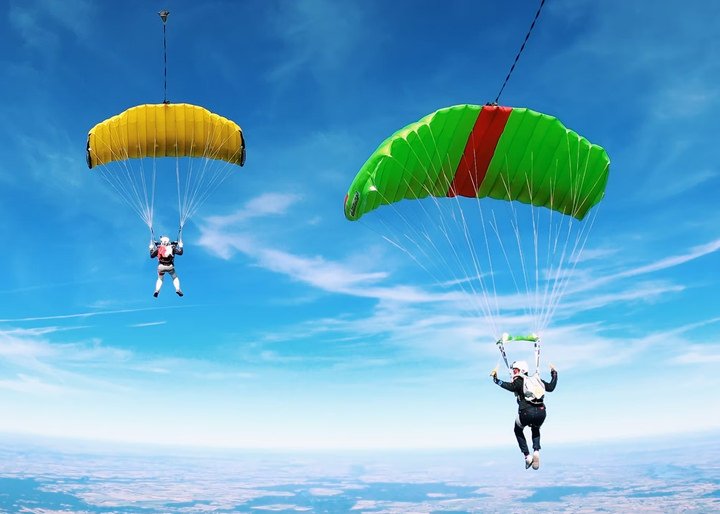
Paragliding -- Paragliding looks similar to parachuting but paragliders glide through the air rather than falling to the earth. Paragliders typically launch from mountainside. The paragliders then pilot the plane using the ropes tied to its wings. He can pull the rope attached to his harness if he wants to land. The parachute automatically opens.
-
Surfing -- Surfers ride waves on the ocean floor. Surfers are usually upright when surfing. The board is used as a surfboard. The board allows the surfer propel himself forward. When the wave recedes, he paddles back out into deeper water.
-
Snowboarding -- Another extreme sport is snowboarding. Snowboarders use special boards to glide down hills. They also use special bindings that secure their feet to their boards. Snowboards typically come with wheels so riders can glide down slopes easier.
-
Skateboarding -- This is a combination skateboarding and rollerblading. Skaters use their unique skateboards for navigating city streets and rails. Instead of using rollerblades, skateboards can be used.
-
Skiing -- One of the oldest winter sports is skiing. "Snowshoe" was the original meaning of ski. Skiing is still a popular way to get some exercise.
There are many types of skiing today, which is a far cry from when the sport was first introduced.
There are alpine skiing, cross-country skiing, downhill skiing, and freestyle skiing.
Alpine skiing is the most difficult. Cross-country skiing can be more accessible. The easiest is downhill skiing. Freestyle skiing can combine all three.
Where do extreme sports come from?
Extreme sports began with parachuting. Parachuting was developed during World War II. The first parachute jump occurred in 1942.
Parachutists leapt from gliders and airplanes. They flew down to the ground at high speed. They then opened their parachutes.
Parachute jumps could be deadly. Parachutists were often killed during these events. Paragliding gained popularity after the war.
1948 saw the first paraglider flight near Lake Garda in Italy. Paragliding continues to gain popularity. Today, thousands of people participate in paragliding each year.
Parachuting differs from paragliding in one key way. Para-gliders do not land on the ground. They land on water.
Statistics
- Landscaping and grounds-keeping— according to government labor statistics, about 18 out of 100,000 workers in the landscaping industry are killed on the job each year. (rosenfeldinjurylawyers.com)
- Since 1998, overall participation has grown nearly 25% - from 5.2 million in 1998 to 6.5 million in 2004. (momsteam.com)
- Nearly 98% of all "frequent" roller hockey participants (those who play 25+ days/year) are male. (momsteam.com)
- According to the United States Parachuting Association, about 21 people die yearly from skydiving. (livehealthy.chron.com)
- Nearly 40% of all mountain bikers have at least graduated from college. (momsteam.com)
External Links
How To
How do I learn how to skateboard?
Skating is a sport where you use your feet to move on ice or snow. You can either do it alone or with a group of friends. It requires good coordination and balance. It is important to know how to stand tall on the boards. Then practice balancing while moving forward and backward. Finally, try jumping off ramps or stairs. Once you've mastered these skills, you'll find yourself skating faster and farther than ever before!
These are some tips for getting started in skating
-
Decide what type of skates to purchase. There are many different types of skates like inline skates or roller blades. Speed skates, figure and speed skates are all available. Depending on your level of experience, you can choose the right kind of skates. If you are just starting out with skating, inline, roller, or speed skates will work well. Figure skaters often prefer to wear boots that offer support during the performance.
-
Buy proper equipment. The purpose of your gear selection will depend on whether it is for competitive events or simply to enjoy skating in the park. Skates that are well-made, durable, and fit well for competition are the best.
-
Learn new skills. Learning any skill takes practice. It's not necessary to wait until you are proficient in a particular skill to learn it. Instead, learn simple moves such as walking backwards, sliding sideways, spinning and so on. You won't be intimidated if you try more difficult moves later.
-
Continue to learn. Do not expect to be proficient overnight. The best skaters spend years honing their craft. And they never stop improving. Also, remember that there are many ways to improve your technique. You could take lessons at your local rink, sign up for a recreational league, or watch videos online.
-
Be patient. Do not worry if you are still having difficulty mastering a complicated maneuver. Just keep practicing. You will eventually develop the confidence to perform advanced stunts.
-
Have fun. Skating is a great sport because it requires no special training and doesn't cost a lot. It's also great fun!